

A Long December
On grief, holiday memories, and finding ways to keep loved ones present

A long December and there's reason to believe
Maybe this year will be better than the last-“A Long December,” The Counting Crows
Hey readers. If you don’t mind, I’d like to pivot with this week’s post. Instead of discussing recovery from my disease of alcoholism, I want to talk about the other subject I’m unfortunately very familiar with. Loss and grief.
For those of you who don’t know, I lost my brother William in 1990 when I was 18 years old. He was 21 and died in a drunk driving accident. In 1997, I lost my sister Julia to suicide. I was 25. She was 29. And then, in 2017, my 78-year-old mother succumbed to her many illnesses.
The last loss was not tragic but, of course, still sad. And grief has a way of multiplying, so any previous losses get piled on to the recent loss. Outside my mother’s hospice room, my sister Roseann said, “And then there were three.” The Bassler family was once a family of six, and now we are three. As I wrote that last sentence, my eyes teared up, which shows that I’m still so impacted by these losses, even with so much time having passed.
Recently, in my work, recovery, and friend groups, there have been a lot of deaths. I find that loved-one-adjacent deaths often come in threes. What do I mean by loved-one-adjacent? Someone that I love and care about lost someone that they loved and cared about. For example, my husband lost a childhood friend, or my sister’s best friend lost her brother. In my experience, if I hear of one of these deaths, I know that two more are coming, and I hold my breath until all three of them are revealed. When I learn of the third death, I think, “Okay, that will be it all for a while.” I know that’s some magical thinking, but in my experience, it seems to happen that way.
However, these past two months, there were three loved-one-adjacent deaths and then four and then five and then six. There have been multiple deaths in all my circles. In my sober family alone, one sober sister lost her father, and another sober sister lost her mother within a week of each other. At work, two of us had to attend funerals, and another one lost a childhood friend.
Ugh, my heart feels heavy, and I want to wrap everyone up in a bear hug. And I’m not a hugger!
Heading into the holidays after losing a loved one is hard. In fact, I might say that after losing a loved one, the holidays will forever be difficult. Is that too depressing? Sorry!
Here’s an excerpt from my first memoir that talks about what Christmas was like after my sister Julia died:
At my parents’ house, I find and pack up my winter gear for the ski trip. I’m excited to go away and grateful for Cathi’s father for inviting me. This is the second Christmas after my sister Julia’s death. I know from experience, too much experience, that it’s going to suck. For days before and after Christmas, there will be a sad tension in the air that no one will talk about. My mom will stay in the kitchen drinking her Scotch while prepping meals. My dad will read in his armchair by the fire in the living room. No one will say anything about missing Julia and William. We will all pretend we don’t feel the heavy sadness in the air.
Around 2010-11, my immediate family had an intervention of sorts. My sister Roseann and I had had enough. The silence was too heavy. We all went to therapy, where my mother said she didn’t understand why we wanted to relive the pain of the past. Couldn’t we all just focus on the future? But Roseann and I insisted it was necessary to keep William and Julia present in our lives. That not talking about them had fucked us up. We brainstormed ways to keep their memories alive. We tried lighting two candles at holiday dinners in their memory and having a family game night where we played Yahtzee (one of my sister Julia’s favorites).
One of the memorial initiatives (I'm not sure how else to phrase it) was to talk more about our deceased siblings to our kids. That led to one awkward interaction. Chris, our three young kids, and I were getting ready to kayak at a lake when another family arrived at the landing dock. My daughter Julia was an adorable preschooler with a wide smile and bouncy red hair. One of the strangers asked her, “What’s your name?”
“Julia,” she responded.
“Oh, that’s a beautiful name,” they said.
And my three-year-old daughter said, “Yeah, I’m named after my aunt. She died.”
Oh, those poor people! They immediately turned to me and said, “I’m sorry for your loss." I had to explain, “Oh, it was years ago, but we are trying to talk about it more. " The whole thing was the most awkward kayak experience ever.
After a while, we stopped doing these initiatives. They were so forced that they felt insincere.
But things are better now, and as I’m writing this, it occurs to me that it might be because my mother has passed. It was too hard for her to talk about the loss of her children. I don’t fault her for that. I can’t imagine what that was like for her.
But now that she’s gone, Roseann and I have more freedom to discuss the past. We can mention our siblings’ names without seeing my mother’s face shut down. And my 86-year-old father seems to be opening up more as well. Lately, he’s been telling stories I’ve never heard before. I’m so grateful for them.
Anyway, that was all a lead-up to what I want to talk to you about today. While I'm no grief therapist, here are some suggestions for dealing with grief during the holidays.
Don’t attempt to drink your grief away. Take it from me. It never helps. It always makes the grief worse.
Reach out to someone who knew the loved one you are missing. Send them a text or pick up the phone and share something.
On the day before Thanksgiving, during COVID, I was missing my mother, who was a Thanksgiving Martha Stewart before Martha Stewart was a thing, so I grabbed my phone and texted all the women in my family who I knew were also prepping for Thanksgiving. Everyone chimed in with pictures of the cranberry relish they were making or with pie recipes. It was the loveliest group chat. And then, since then, my beloved cousin passed. I’ve saved the group chat as a PDF, and now I have a record of this amazing discussion.
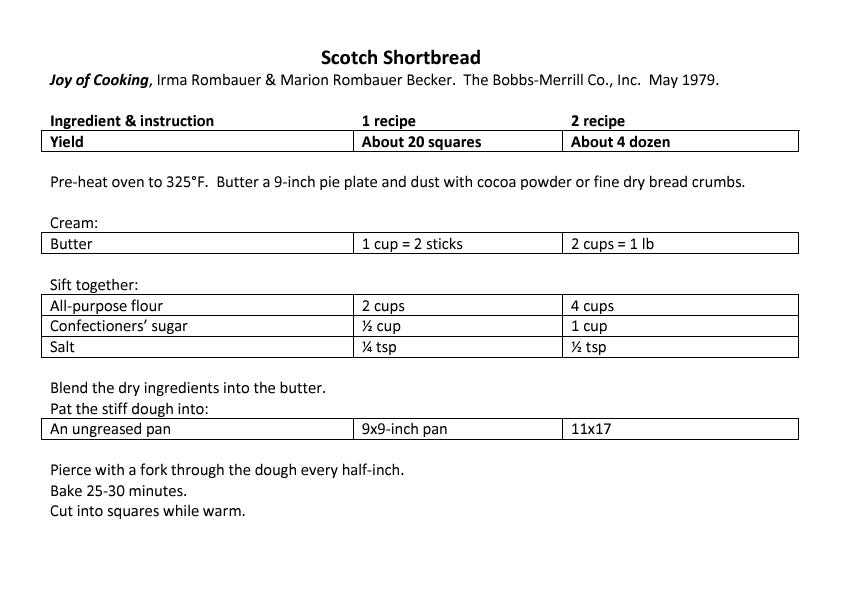
Maintain a tradition that will remind you of the person you are missing. I make my grandmother's Scotch Shortbread every holiday season, keeping her memory alive through this simple dessert. See below for the recipe.
Feel your feelings and then let them pass. It’s important to feel your grief. Imagine grief like a tetherball. If you keep punching it away, it will swing back at you, harder this time, and at different angles that will wallop you if you’re not paying attention. When the feelings come, sit with them for a minute. Acknowledge your grief and let the tears flow. I recommend crying in the car or the shower. But don’t wallow for too long. A self-pity spiral is self-centered, useless, and destructive. (I should know, I’m an expert!) Instead, turn your feelings into something useful. Make a photo book for future generations. Write a story about your loved one. Reach out to cousins who might be missing their mom. There are so many ways to turn your grief into a connection with another person. The Christmas after my brother died, someone left a decorative tabletop angel on our front stoop. I don’t know if we ever found out who did that. My mom cherished that angel.
Ok, that’s all I have for now. For more from an actual grief therapist, follow Katie Morgan’s The Grief Ritual’s Instagram account.
And if you’re worried about what to say to someone grieving, check out “The right (and wrong) things to say to a grieving friend” from NPR’s LifeKit.
As promised, here’s the Scotch Shortbread recipe.
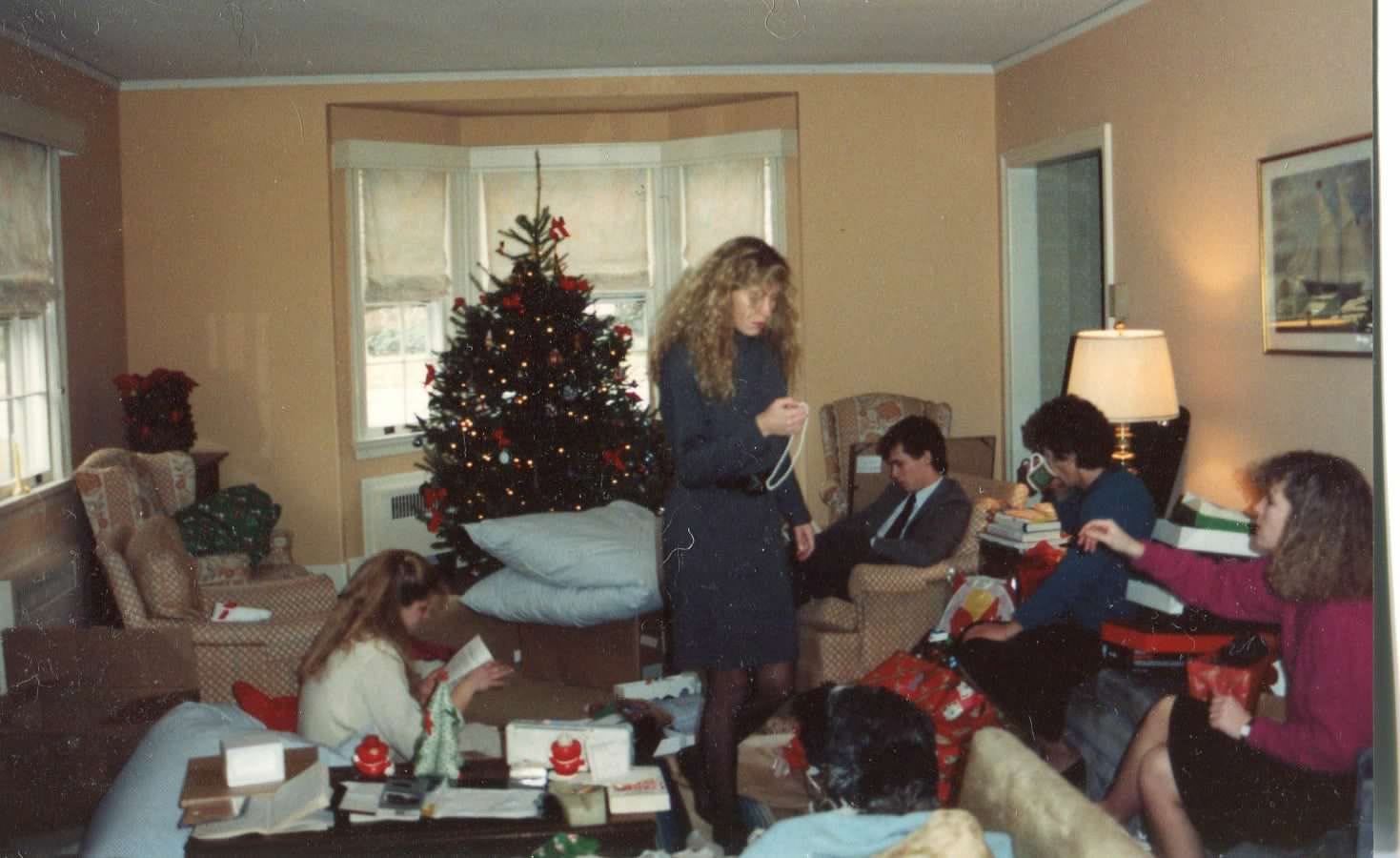
And here’s a photo, probably from the last Christmas the Bassler family spent together. (My dad is behind the camera.)
Disclaimer: To err is human. Please excuse any typos or grammatical errors. I employ Grammarly, but mistakes happen. In this world of AI, they're my way of keeping things delightfully human.
Beautiful, heartbreaking, and helpful. I was two-thirds into it when I realized that I was reading it as if it had nothing to do with me, as if I had no grief to shake hands with. While in fact I do. And reading this helped.
I love the tetherball analogy. So much helpful and tender info in this post!